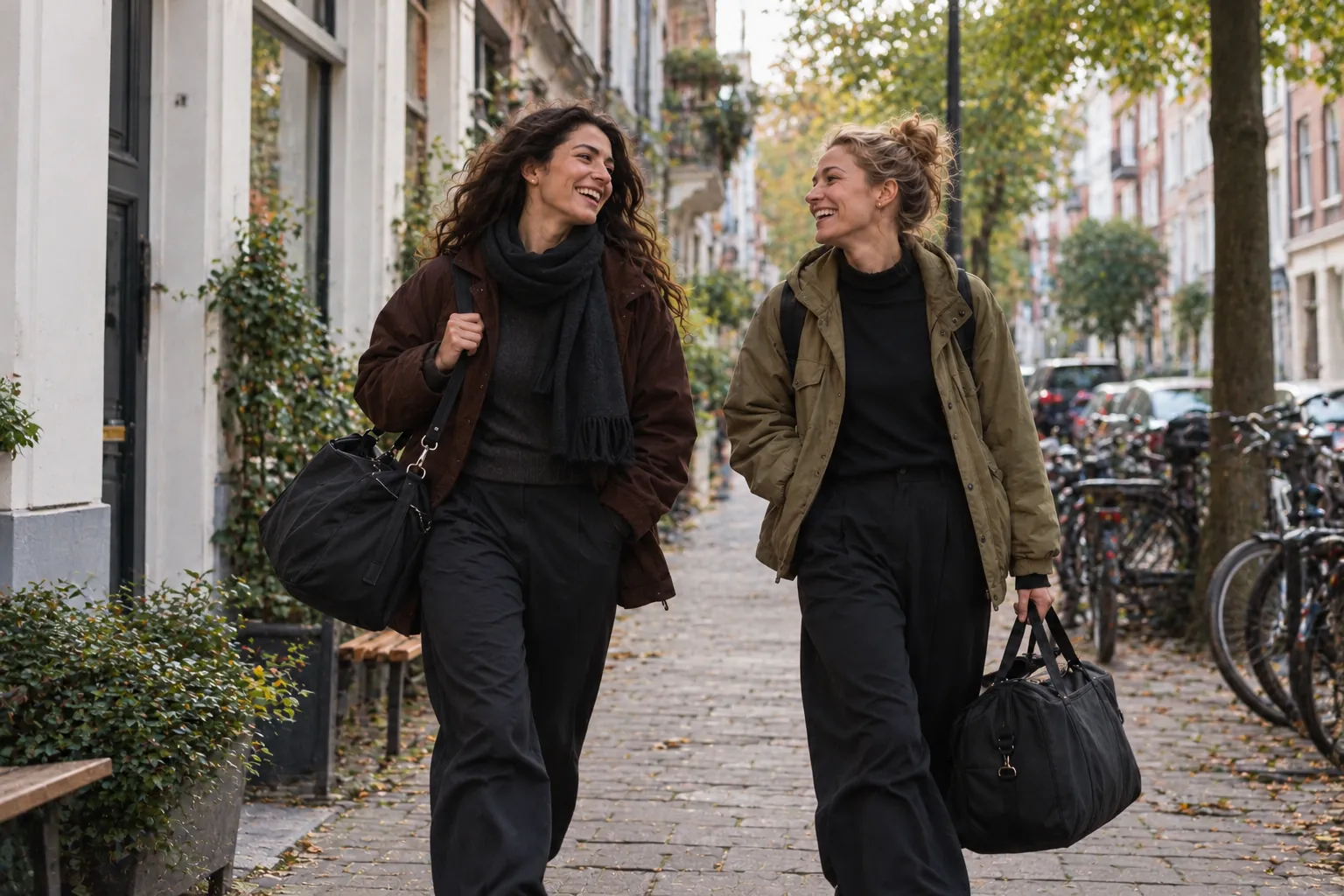
Give the eye a starting point
Decide what matters most in the frame: a performer’s expression, a movement or the scale of a room. Move yourself or the camera until that subject has a clear place. A bright sign, an open door or another person may otherwise draw attention away.
You do not need to remove every detail. Keep the details that explain the setting and simplify the ones that make the main subject difficult to see.
Leave room for movement
A dancer needs visual space as well as physical space. Look at where a gesture is going and leave room in that direction. Check the whole frame, especially hands, feet and the edges of clothing.
For a venue image, include enough of the room to show its scale and layout. A close detail may communicate mood, but it cannot replace a wider view when someone needs to understand the stage.
Build a balanced selection
A collection becomes clearer when the images offer different information. Start wide to establish the setting, come closer to show the people and finish with a detail that carries the atmosphere.
- Use one strong opening image rather than several similar frames.
- Mix a venue view, a performance moment and a preparation detail.
- Keep the editing consistent so the collection feels connected.
- Remove duplicates that do not add anything useful.
Check the small screen
View your selection on a phone before sharing it. Can the subject still be found quickly? Is the image readable in a narrow crop? If text will appear over it, check that the words remain legible and do not cover an important expression.
Keep the image that says something clearly. A smaller, considered selection is easier to understand than a folder full of near duplicates.